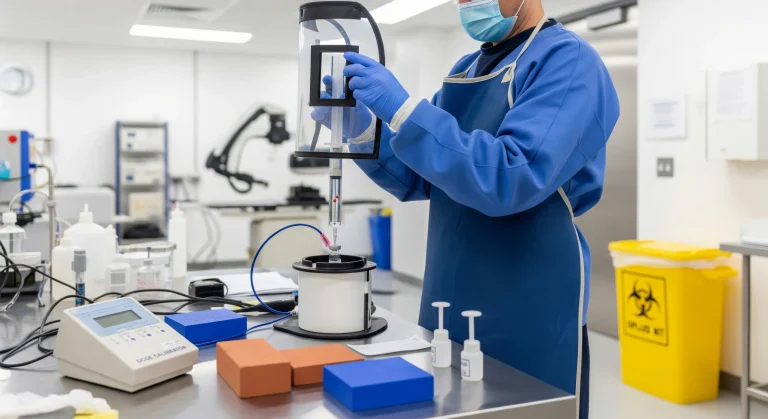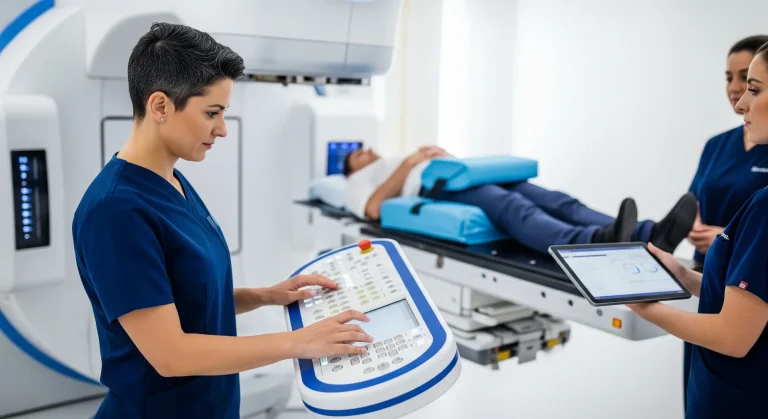
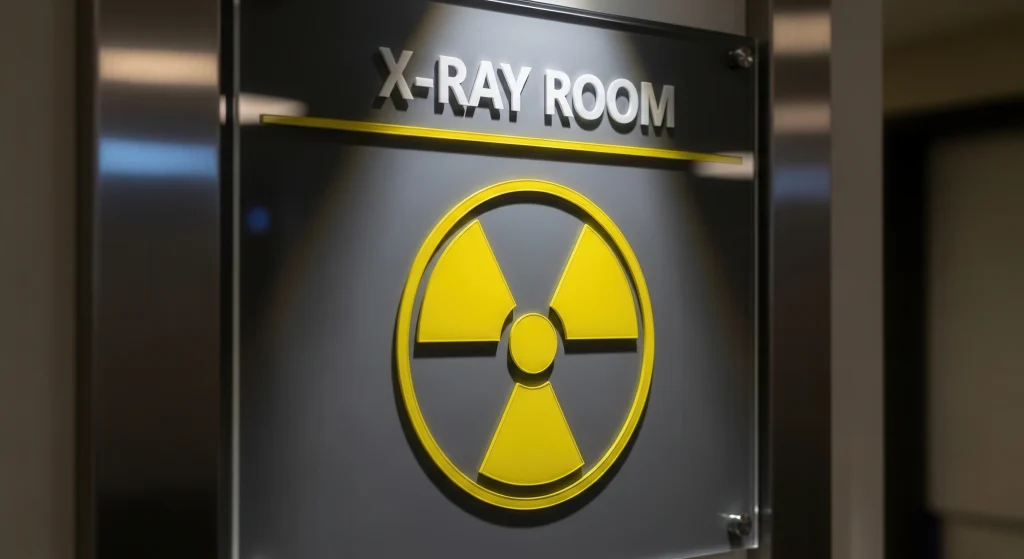
Procedure room radiation safety setup isn’t a one-time project. It’s a layered system, and when one layer is missing, the others have to compensate. A guide to radiation dose monitoring and exposure tracking in procedure rooms starts with understanding all three layers: structural controls that manage baseline exposure, workflow controls that keep staff out of the beam when possible, and radiation protection equipment that handles the rest. Each layer builds on the previous one. None replaces the others.
What Structural Shielding Does a Procedure Room Actually Need?
Before any staff member steps into a fluoroscopy suite, interventional radiology room, cath lab, or OR with a mobile C-arm, the room’s structural shielding should already be doing its job, protecting people outside. For those working inside, that responsibility shifts to equipment: mobile barriers, lead aprons, and other protective gear.
The specification depends on what’s in the room (equipment type and energy levels), how often it runs (workload), and who’s on the other side of every wall (adjacent space occupancy). A low-volume fluoroscopy room on an exterior corner has completely different requirements than a high-volume cath lab sharing a wall with a patient recovery unit. A medical physicist typically determines the exact specifications.
Standard construction includes lead-lined drywall, leaded doors, and leaded glass observation windows. Ground-floor placement avoids the need for separate floor shielding calculations. Upper-floor installations require a separate physicist calculation for the floor below, and that’s not optional, and it’s not included in a standard shielding report. Per OSHA guidance, any change to equipment, workload, or adjacent space use requires a new shielding review before resuming operations.
When Does a Facility Need a New Shielding Report?
It’s common for facilities to get a shielding report at installation and never revisit it. As equipment, workloads, and room configurations change over time, that original report may no longer reflect current conditions.
A new assessment is required when equipment changes, procedure volume increases significantly, a room is remodeled, or an adjacent space changes its occupancy. A storage room converted to a staff lounge changes the occupancy assumptions, which changes the shielding requirements. Catching that before construction costs a physicist’s consultation. Missing it costs a retrofit.
How Should the Operator Control Area and Staff Positioning Be Arranged?
The operator control area requires two things: line of sight to the patient and adequate shielding from both primary beam and scatter radiation. OSHA is clear that, when possible (like conducting imaging), fluoroscopy procedures should be run from an adjacent, shielded control room. If the room has a control booth, operators need to use it.
In fluoroscopy suites, cath labs, and ORs with a mobile C-arm, staff routinely remain in the room during imaging. AORN, following ALARA guidance, suggests in those environments: stand at least 6 feet from the radiation source when possible, minimize time near the beam, and position mobile lead barriers to intercept scatter for anyone who can’t step back.
Mobile shields are engineering controls, not optional accessories. A properly positioned shield intercepts scatter radiation before it reaches the staff member. Lead aprons are the last line of defense. Engineering controls exist so aprons aren’t doing that job alone.
The control station should be clearly designated and easy to access. When the layout makes it difficult for staff to reach or use the designated position, workarounds become the norm, not because of carelessness, but because the environment isn’t set up to support the right behavior. Thoughtful room design makes compliance the path of least resistance.
What PPE and Garment Storage Should Be Built Into the Room Setup?
Even in a properly shielded room with all the right engineering controls in place, staff who work near the beam need their own layer of protection: lead aprons, thyroid collars, and leaded eyewear. Lead gloves are required when hands are in or near the primary beam. OSHA and AORN both identify properly fitted lead aprons as essential in these settings.
How aprons are stored between cases directly affects their protective integrity; folding or improperly storing aprons can lead to cracks in the lead lining, reducing their effectiveness in blocking radiation, and damaged garments are also a common TJC finding. Dedicated hangers on wall-mounted or free-standing storage racks keep aprons properly supported and accessible, making it easier for staff to handle them correctly without adding steps to their workflow.
How Often Do Lead Aprons in Procedure Rooms Need a Formal Integrity Inspection?
Annually, at a minimum. TJC, and other surveyors, require annual integrity inspections with documented results.
Visual and palpation inspections are useful for identifying surface-level damage, tears, frayed seams, broken closures, but research has shown they cannot reliably detect internal defects in the protective material. In one study, no abnormality was detected upon visual and tactile inspection, yet imaging revealed that aprons used for six or more years had damaged internal radiation shields. X-ray or fluoroscopic scanning is the only method that consistently identifies that kind of hidden damage
How Does RadCare Services Support a Compliant Procedure Room Program?
A properly configured procedure room handles the structural and workflow layers of radiation safety. The garments used in that room every day are a different problem, and one that requires its own program.
RadCare Services (RCS) manages the full radiation protection equipment lifecycle: deep cleaning and disinfection, complimentary repairs, annual X-ray integrity scanning, inventory tracking via RadComply®, and compliant disposal when garments fail inspection. More than 500 healthcare teams across 43 states have relied on RCS for over a decade.
RCS will tag, inventory, inspect, and track every garment in your program. When the surveyor walks in, you’re ready. Book a free lead apron maintenance consultation with a RadCare Specialist.