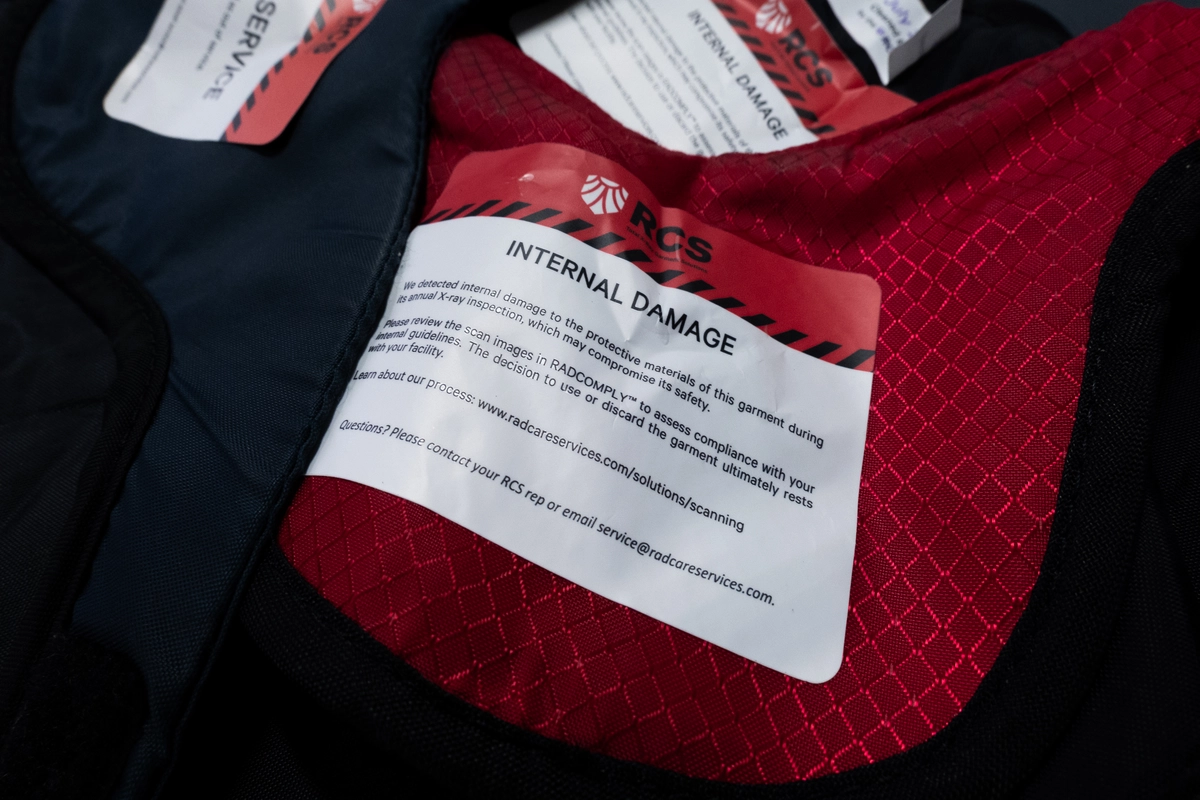
Lead Garment Disposal Without the Headache

EPA-Compliant Lead Apron Disposal and Recycling Services

Lead is a toxic material regulated by the EPA, and improper disposal could expose your facility to legal and environmental risks. RCS offers certified disposal and recycling services, including documentation to support your facility’s compliance with hazardous waste management guidelines.
Trusted by 500+ Teams


How the Process Works

RCS Makes Lead Apron Disposal Simple

Whether you’re a current service customer or need a one-off disposal, we are ready to support you. RCS uses an EPA-compliant disposal process. Once complete, you’ll receive a certificate of disposal, and the garments will be removed from your RadComply inventory for accurate tracking.

Request Disposal

Submit your disposal request using our quick online form. A team member will follow up with a quote.

Transport

Mail your garments to us, or—if you have a service contract or high volume—we’ll coordinate on-site pickup.

Disposal

Garments are handled through our EPA-compliant disposal program.

Documentation

You’ll receive a certificate of disposal for your records to support audit and regulatory compliance.

Schedule Your EPA-Approved Garment Disposal

Fill out this quick form to help us understand your needs. We’ll reach out within one business day to help!

This field is for validation purposes and should be left unchanged.
Name(Required)
This field is hidden when viewing the form

Why Proper Lead Apron Disposal Matters

Incorrect disposal puts your compliance at risk.

Lead aprons cannot simply be thrown away with regular waste. Because lead materials are regulated due to environmental and health risks such as high blood pressure and other exposure-related issues, healthcare facilities must follow strict guidelines for lead garment disposal and recycling. Instead of attempting to throw lead aprons in standard trash streams, organizations are expected to work with a qualified recycling company or approved recycling centers that can safely recycle lead aprons and manage proper lead disposal. Following these protocols helps ensure safe handling, regulatory compliance, and responsible recycling of lead aprons used in medical environments.

When aprons are sent through regular waste streams or dumpsters, there’s a risk of non-compliance with federal and state environmental guidelines. Proper disposal helps protect your organization from long-term liability, ensures you’re aligned with hazardous waste rules, and demonstrates responsible environmental stewardship.

Disposal Best Practices:

  • Handled through EPA-compliant recycling or hazardous waste facilities
  • Documented chain of custody
  • Certificate of proper disposal for your records
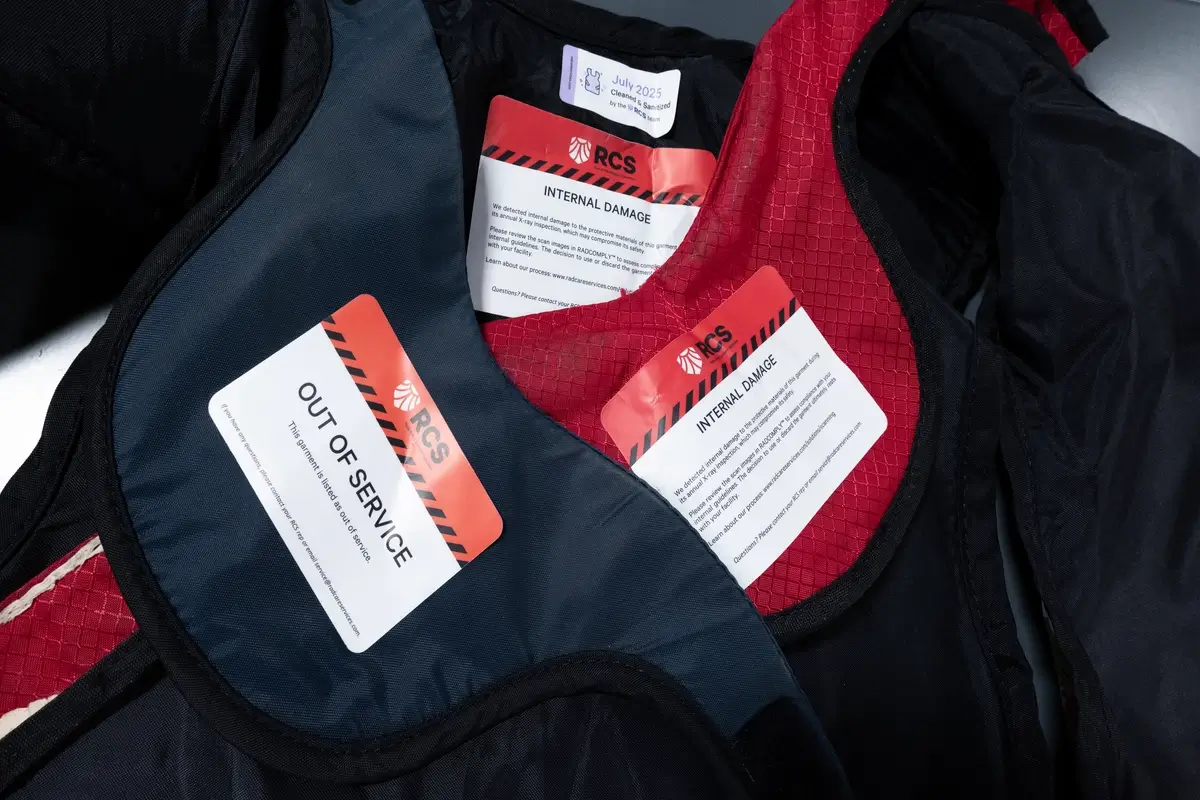
Lead Garment Disposal Made Easy

Certified Disposal Process

RCS handles every aspect of lead apron disposal through EPA-approved facilities and processes. We collect retired garments through our RadOnsite or RadShip services, transport them using certified hazardous waste protocols, and process them at approved recycling or disposal facilities.

Our Disposal Services Include:

  • Pickup or shipping coordination
  • EPA-approved disposal
  • Documentation to support your compliance records
  • Automatic removal of disposed garments from RadComply®

When Disposal Is Complete:

After disposal, you’ll receive a certificate confirming disposal for your records, and any garments removed are updated in your RadComply® inventory to reflect their out-of-service status.

How Garment Disposal Keeps You Compliant Without the Hassle

Lead Garment Disposal That Saves Time, Reduces Risk, and Keeps You Ready

Most departments have a growing pile of retired lead aprons collecting dust because no one’s sure what to do with them. RCS takes the hassle off your plate with fast, compliant disposal that saves time, reduces environmental liability, and keeps you prepared for audits or inspections. We make it easy—no guesswork, no gaps, just a clean solution from start to finish.

Statistics That Matter:

EPA-Certified

RCS uses an EPA-certified disposal process.

100% Confidence

With RCS, you get a hassle-free and worry-free disposal process.

2,000lbs

RCS safely disposed of 20,000lbs of lead in 2025.

1.5-2x Garment Lifespan

Garments serviced by RCS see, on average, a 1.5-2x increase in lifespan compared to garments not serviced by RCS.

Certified Disposal, Simplified.

Lead Garment Cleaning & Care: What Every Hospital Needs to Know

Clean Those Leads

Hospital-owned lead garments require professional deep cleaning, not just surface wipes. RCS follows a proven two-step cleaning and disinfection process that meets AORN, The Joint Commission, and CDC standards to eliminate bacteria, viruses, fungi, and spores.

Save Time

RCS customers save an average of 13 minutes per garment by eliminating the need for staff to perform manual X-ray scans, track inventory spreadsheets, and manage repair schedules. Our service frees your radiology techs and clinical staff to focus on patient care instead of garment management.

84% Of Lead Vest Are Contaminated

A Wayne State University study found that 84% of lead aprons tested positive for Ringworm and Staphylococcus aureus, with 12% colonized by MRSA. Contaminated protective equipment puts both healthcare workers and patients at risk of infection.

Wipes Aren’t Enough

Surface wipes alone are clinically proven ineffective for properly sanitizing lead garments. True disinfection requires a two-step process: friction-based cleaning followed by proper disinfection using bactericidal, viricidal, fungicidal, and sporicidal solutions.

Frequently asked questions

Lead aprons are a standard radiation protection equipment item in medical facilities. They’re often used during procedures like X-rays and interventional operations using C-arms or fluoroscopy. However, over time, they will become worn out, less effective, and must be disposed of properly. 

The challenge with disposing of lead aprons is that the Environmental Protection Agency (EPA) lists lead as a highly toxic substance. Therefore, medical facilities need to follow proper regulations and procedures to ensure safe, compliant, and environmentally friendly disposal processes when discarding old aprons. 

Where do you go, and how do you dispose of lead aprons? We have all the information you need to know here. 

Yes, x ray lead aprons can hold in radiation because the lead layer blocks x ray radiation for safety, but once they are damaged or no longer effective they must be disposed of properly. Most facilities cannot treat them as regular medical waste, so you should contact a recycling company, a local scrap metal recycler, or a local landfill to confirm whether they accept lead aprons for compliant disposal.

Lead is highly toxic. If disposed of incorrectly, it can lead to many risks for public health and the environment, making proper disposal essential.

Public Health Risks of Improper Lead Disposal

Lead is a toxic metal with no safe level of exposure. It’s especially harmful to children and pregnant women.

The Environmental Protection Agency (EPA) states that improper disposal of lead can contaminate soil and water sources, increasing the risk of lead poisoning in communities.

A study published byReviews on Environmental Health stated that lead exposure in communities can have numerous health effects, such as:

  • Neurological damage
  • Developmental delays in children
  • Chronic health issues, such as pain, high blood pressure, and reproductive health issues to name a few

Even low levels of lead exposure can be detrimental to human health.

Environmental Risks of Improper Hazardous Waste Disposal

Along with public health and safety, improper lead disposal can harm ecosystems and wildlife. Here are some common issues:

Understanding the role of a local landfill can help individuals make better choices concerning waste disposal and contribute to sustainable waste management.

  • Soil contamination: A study in 2023 found that lead contamination disrupts soil microbiota, affecting plant growth and entering the food chain, posing health risks to humans and animals.
  • Water pollution: Lead leaching into groundwater and surface water bodies contaminates drinking water sources and aquatic ecosystems. A study from the Journal of Environmental Research and Public Health found that aquatic organisms exposed to lead may experience bioaccumulation, causing toxic effects up the food chain.
  • Air pollution: Improper incineration of lead-containing materials releases lead particles into the atmosphere. These airborne particles can travel long distances, depositing onto soil and water surfaces and contributing to widespread environmental contamination. A recent study in 2024 showed that airborne metal contaminants pose big risks to the environment and human health.

Regulations and Policies

To prevent these harmful effects, the EPA has establishedcomprehensive federal regulations to control lead exposure and ensure the safe disposal of lead-containing materials, such as lead aprons. Medical facilities should adhere to these guidelines when setting up a lead apron disposal policy.

  1. Identification and classification: The first step is determining hazardous waste status. Facilities must assess whether aprons meet the criteria for hazardous waste under theResource Conservation and Recovery Act (RCRA). This involves evaluating the lead content and potential for contaminating the environment.
  2. Accumulation and storage: Lead aprons designated as hazardous waste should bestored in labeled, leak-proof containers to prevent lead dust or particles from contaminating the environment. Facilities must adhere to specific timeframes for storing hazardous waste on-site, which vary based on the quantity of waste generated.
  3. Transportation: Hazardous waste must be transported byEPA-certified haulers to ensure safe and compliant movement to disposal or recycling facilities. A hazardous waste manifest must accompany the shipment, detailing the type and quantity of waste and tracking its journey from origin to disposal.
  4. Disposal or recycling: Lead aprons must be sent to EPA-permitted hazardous waste disposal facilities or recycling centers equipped to handle lead-containing materials safely. The EPA promoteslead recycling at certified facilities when possible, as it conserves resources and reduces environmental impact.
  5. Recordkeeping and reporting: Facilities are required to keep detailed records of waste determinations, manifests, and disposal methods for a minimum of three years. Large Quantity Generators (LQGs) must submit reports to the EPA every two years, summarizing waste management activities. Additionally, it is crucial to comply with local regulations to ensure all disposal methods meet regional requirements.

Since the EPA has many regulations to ensure health and safety during lead apron disposal, here’s a quick step-by-step process.

Visual and tactile inspections can be done every 6 months, but understand that they’re best to identify obvious damage and don’t replace thorough X-ray scanning. 

  1. Start by assessing the aprons you have on hand. Look for signs that they need to be removed from your inventory. Signs could include large cracks, tears, holes, or significant thinning of the lead. The evaluation process is most easily accomplished during your annual integrity checks, particularly when the garments are scanned using X-ray or fluoroscopy.
  2. Next, you’ll need to select a disposal method. The EPA allows lead aprons to be recycled if you bring them to a scrap metal recycler or return them to the original manufacturer. Otherwise, you’ll need to send them to a waste disposal facility that adheres to local, state, and federal guidelines. Contact hazardous waste companies to ensure proper licensing and compliance with regulations.
  3. Finally, you’ll want to document that lead aprons have been properly disposed of and that they’ve been removed from your inventory. Recycling or disposal facilities should send you documentation to ensure compliance.

Common Practices in Healthcare Facilities

Healthcare facilities can ensure the timely disposal of defective aprons by implementing regular inspections. We recommend that inspections be conducted using X-ray or fluoroscopy at least once each year. We can help with this at Radiological Care Services (RCS). Our service includes annual integrity inspections using X-ray to catch issues early.

Many healthcare facilities also partner with disposal services to make the process easier and manage lead apron disposal costs. We can also help with that at RCS through our EPA-approved disposal service. Simply send us the aprons you need to be disposed of, and we’ll take care of the rest.

A good place to start when looking for local disposal options is searching for phrases like “lead apron disposal near me” or “lead recycling near me.” For an easier option, you can send lead aprons you need to be disposed of to RCS. We’ll make the process quick and simple.

When looking for recycling options, local scrap yards, reclamation centers, or a local scrap metal recycler are generally the best bet. Before you make your way over there, it’s usually best to contact them to ensure they handle lead-containing materials. Burlington Medical also offers recycling services for various types of lead shields and aprons, including products from multiple manufacturers.

Otherwise, hazardous waste facilities specializing in lead materials are usually the best option for disposal.

Disposal regulations may vary by state, so contacting your state’s local EPA can be a good idea if you’re unsure what to do. They may even provide you with some local options you can use.

Lead Apron Disposal in California

California’s Department of Toxic Substances Control (DTSC) enforces additional rules for managing hazardous waste, requiring facilities to adopt stricter pollution control measures. X ray lead aprons disposed of in California often undergo advanced recycling processes due to the state’s emphasis on sustainability and waste minimization.

Establishing a structured lead apron disposal policy is essential for healthcare facilities to ensure compliance with environmental regulations and minimize health risks. Policies should include:

  • Regular inspections
  • Proper documentation
  • Defined procedures for hazardous waste management

Unlike non-lead aprons, which can be discarded in the regular trash, lead aprons must follow specific disposal procedures due to their environmental impact.

It can be helpful for facilities to designate a coordinator who oversees disposal processes and ensures adherence to EPA guidelines.

Proper lead apron disposal is crucial for protecting the environment, complying with regulations, and ensuring safety. Therefore, healthcare facilities must adopt responsible lead apron disposal practices.

At RCS, we make lead apron management simple. Our EPA-approved disposal services ensure aprons are safely discarded or recycled. 

We also offer cleaning, sanitization, and inspection services to extend the lifespan of your aprons and maintain safety standards. Let us handle the details so you can focus on patient care. Our software, RadComply, streamlines inventory management, helping you track inspections, cleaning, and disposal at every step. 

You can contact us today to get started or with any other questions you may have.