
Extend Equipment Life

X-Ray Garment Repair Services for Hospitals

Wear and tear on the outside of a garment can shorten its lifespan. This can lead to problems that might force you to replace it sooner than needed. RCS offers one-off repairs and includes complimentary cosmetic repairs with every service contract, extending equipment life by years and protecting your capital budget from unnecessary replacement costs.

Trusted by 500+ Teams


Lead Apron Repairs Made Easy

Cosmetic Lead Apron Repairs

Whether you’re a service customer, or just need a one-off repair, our expert team is here to help.

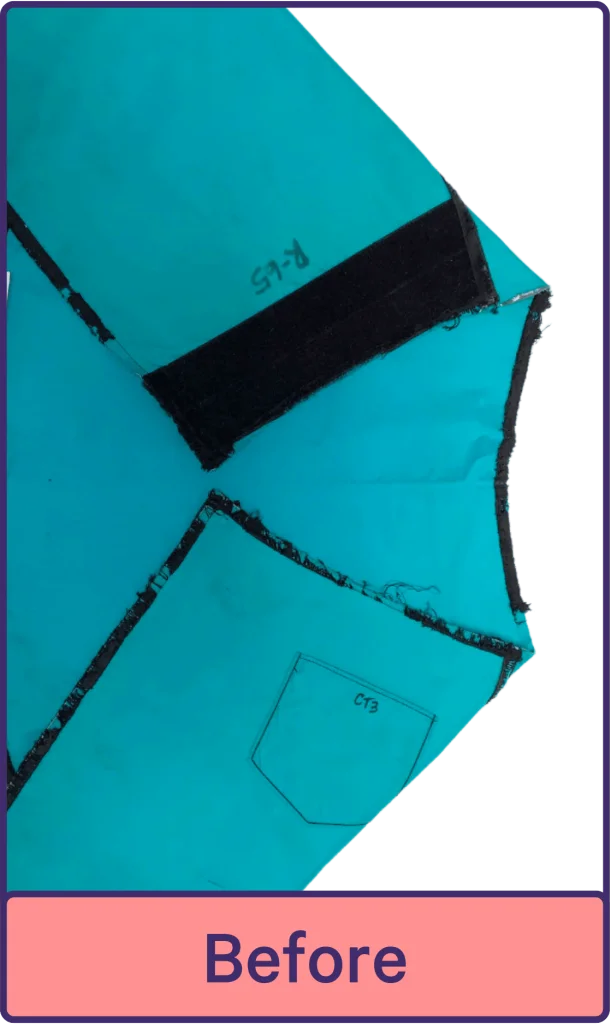
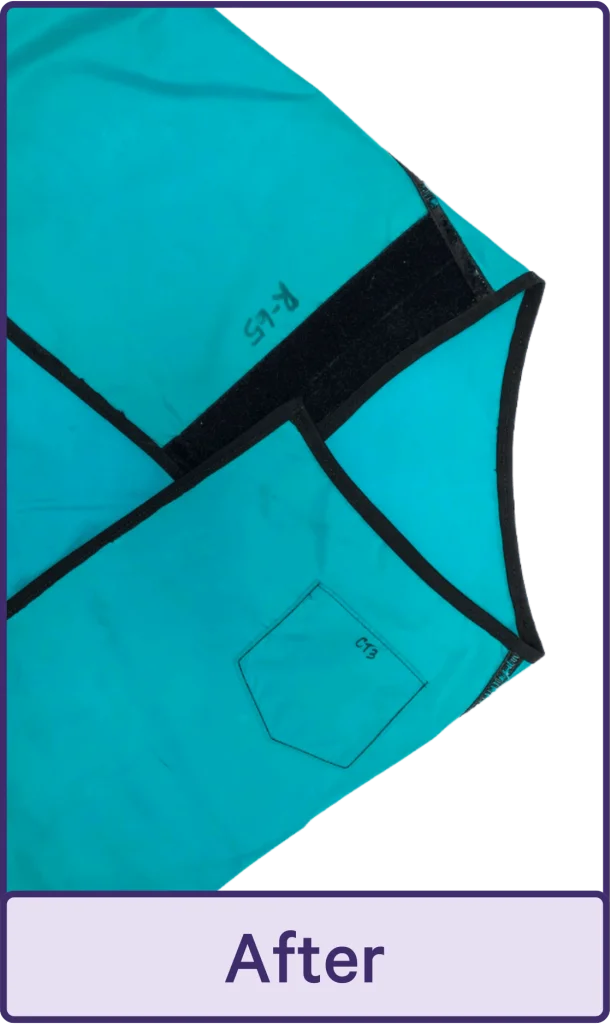
Every garment brought in is assessed for cosmetic damage that can be mended to extend lifespan. Our team repairs straps, replaces worn Velcro, and fixes broken closures at no additional cost while the garment is in our facility for service.

What Gets Repaired:

  • Replace frayed binding
  • Velcro replacement
  • Buckle and strap repair

When Garments Are Returned:

Your aprons come back with all exterior cosmetic repairs completed. If you’re a service customer, we’ll sew in identification tags for easy scanning and tracking. Each garment can be scanned to check the most recent inspection results and locate service history in RadComply, making inventory management and audit preparation simple.
Get Your Damaged Garments Repaired

Share details about your torn straps, broken closures, or compromised garments. We’re ready to help!

This field is for validation purposes and should be left unchanged.
Name(Required)
This field is hidden when viewing the form

Why Professional Garment Repairs Matter

Repairable garments are often replaced unnecessarily, wasting thousands in capital budget.

Many facilities lack the time or resources to manage repairs themselves. Professional cosmetic repair services extend the life of garments by addressing damage before it worsens, delaying the need for replacement, and maximizing returns on equipment investments.

Common Cosmetic Issues We Repair:

  • Broken buckles and straps
  • Worn Velcro closures
  • Torn seams and frayed binding
How the Process Works

Repairs Completed During Scheduled Service

Every garment undergoes inspection in our repair assessment area. Our technicians test closures—including the so-called “Buckle Bros” team—by hand, because damage isn’t always visible until you try it. Any repairable cosmetic issues are professionally mended. And for service customers, ID tags are sewn in for easy tracking and all updates are documented in RadComply.

Review & Assess

We examine each garment for exterior damage and check for any repair notes submitted in RadComply.

Flag Repairs

Our technicians identify all repairable issues, like worn Velcro, torn seams, or broken closures, and prepare the garment for repair.

Repair & Restore

All cosmetic repairs are completed at no charge as part of your service contract, restoring safe, functional use.

Tag for Tracking

Durable ID tags are sewn in for easy scanning, linking each garment to its full service history in RadComply.

Statistics That Matter:

$75 Average

Typical manufacturer repair cost per garment avoided with RCS.

1.5-2x Lifespan

Garment lifespans are extended 1.5-2x through consistent RCS cosmetic repairs and service.

$11,100 Saved

One teaching hospital’s repair cost savings in single service cycle.

100% Included

All cosmetic repairs are complimentary during service with RCS.

How Garment Care Pays

Extends Garment Lifespan and Delays Costly Replacements

RCS’s repair services save facilities thousands annually by addressing minor cosmetic damage before it forces garment disposal.

Regular exterior maintenance can double garment lifespan while identification tag tracking ensures you always know each garment’s service history and warranty status.

Getting Started On Our Full-Service Platform is Easy

Starting with RCS is simple. We assess your facility’s needs, design a service plan to match, and handle every detail. Your garments stay compliant, and your team stays focused.

01

Schedule Your Consultation

Connect with our team to discuss your current garment inventory, department needs, and compliance requirements.

02

Choose Your Service Model

Select RadOnsite for convenient on-site pickup and delivery, or RadShip for a streamlined shipping-based solution with loaner garments included.

03

Experience Seamless Service

RCS handles your lead garment program from end to end, while you access real-time inventory, compliance data, and X-ray scan results in RadComply.

Why Replace When You Can Repair?

Lead Garment Cleaning & Care: What Every Hospital Needs to Know

Clean Those Leads

Hospital-owned lead garments require professional deep cleaning, not just surface wipes. RCS follows a proven two-step cleaning and disinfection process that meets AORN, The Joint Commission, and CDC standards to eliminate bacteria, viruses, fungi, and spores.

Save Time

RCS customers save an average of 13 minutes per garment by eliminating the need for staff to perform manual X-ray scans, track inventory spreadsheets, and manage repair schedules. Our service frees your radiology techs and clinical staff to focus on patient care instead of garment management.

84% Of Lead Vest Are Contaminated

A Wayne State University study found that 84% of lead aprons tested positive for Ringworm and Staphylococcus aureus, with 12% colonized by MRSA. Contaminated protective equipment puts both healthcare workers and patients at risk of infection.

Wipes Aren’t Enough

Surface wipes alone are clinically proven ineffective for properly sanitizing lead garments. True disinfection requires a two-step process: friction-based cleaning followed by proper disinfection using bactericidal, viricidal, fungicidal, and sporicidal solutions.

X-Ray Garment Repairs FAQ

Understanding what can be repaired on lead aprons is important for safety, cost-effectiveness, and compliance. There are two main lead apron repair types, based on the severity of the damage. The best way to proactively maintain X-ray garments is through regular monitoring of lead apron wear and tear over time. 

Cosmetic (or minor) issues are generally repairable, with successful repairs extending the lifespan of these garments. Cosmetic-type repairs include:

  • Torn or frayed straps
  • Failed Velcro closures
  • Broken buckles or snaps
  • Damaged zippers
  • Tears or holes in the fabric

    More serious issues, such as those that compromise a garment’s ability to protect against radiation (i.e., cracks, tears, or punctures in the internal lead or lead-equivalent material), typically require replacement rather than repair.

Yes, proper lead apron repairs can extend their lifespan by 2-5 years. There are two catches, however. First, it depends on whether the damage is truly surface-level or if the internal lead material is impacted (in which case replacement, rather than repair, is the right course of action). Second, lead apron repair safety depends on whether these garments have been professionally repaired. 

As a safety precaution, repaired lead aprons should always be thoroughly examined before they are used again. By working with RCS, organizations can ensure that these repairs are both timely and effective, ensuring ongoing safety for future users. In addition to including complimentary repairs in service contracts, RCS permanently removes any garments that fail a post-inspection X-ray from circulation.

While every case is unique, when examining the cost to repair vs. replace a lead apron, repairs are usually the more cost-effective option. For example, one Midwestern teaching hospital was able to save over $27k by establishing a biannual service contract with RCS for cleaning, disinfection, and repair. Under this agreement, the hospital saved an average of $75 per garment repaired (the average lead apron repair cost outside of an RCS service contract) by simply repairing those that were repairable (rather than full-scale replacement). The lifespan of successfully-repaired X-ray garments can often be extended by 2-5 years.


These costs (and savings) add up, as this hospital ultimately saved $15,990 by purchasing X-ray garments through RCS, and an additional $11,100 in repair costs was saved through its contract with RCS.

Determining whether lead apron replacement vs. repair is appropriate requires an understanding of the type and severity of damage present, and routine inspections can uncover these issues in a timely manner. There are a few tell-tale signs that will let you know when to replace lead aprons as opposed to repairing them.

  • Protective material tears, cracks, or holes: Studies show that aprons should be replaced when defects exceed…
    • 15 mm² when over critical organs
    • 670 mm² when along the seams, in overlapped areas, or on the back
    • 11 mm² for thyroid shields
  • Frayed nylon: Frayed nylon, depending on its location, is often repairable. However, the frayed nylon may indicate compromised protection, so ensure you do an integrity check to confirm. 
  • Failing Velcro: We’ll often see people using duct tape, clips, or even more creative measures to keep lead aprons on when the Velcro is worn, which compromises the garment’s fit and protection. Velcro is repairable and should be repaired as soon as possible. 
  • Improper fit: For maximum protection, X-ray garments such as lead aprons must properly fit the user, as a too-small or too-large apron will not provide optimal protection against radiation exposure. This means aprons must be regularly inspected for their fit and replaced as needed.

It really depends on the case. While some DIY lead apron repair may be possible for relatively minor, cosmetic issues, such as fixing a lead apron strap, DIY repairs are not typically recommended. 

These fixes can risk compromising the garment’s integrity and may even violate applicable warranties. They can also miss deeper issues, providing the equivalent of a band-aid type solution that doesn’t address more serious problems.

One of the biggest advantages of choosing professional repair over DIY is peace of mind. Rather than risking incomplete or ineffective repairs, RCS provides regular, comprehensive X-ray garment maintenance and repair services, including X-ray verification to ensure a complete repair.

It’s often possible to extend lead apron lifespans through regular inspection, maintenance, and repair. For example, issues related to routine wear-and-tear, when repaired in a timely manner, can add 2-5 years to a garment’s lifespan. 

For the best results, we recommend the following lead apron preventive maintenance best practices:

1. Implement a centralized inventory system: This approach consolidates all cleaning and inspection records in a single, accessible location. RCS uses a cloud-based platform to help organizations manage service records and maintain regulatory compliance, a system called RadComply®, which you can learn more about here.
2. Standardize inspection procedures: Standardization helps with regulatory compliance as well as X-ray garments’ overall safety and longevity. While state regulations often vary, we recommend that lead garments undergo annual X-ray scans as a form of proactive maintenance.
3. Consider professional cleaning and repair service: All too often, facilities struggle to properly manage and optimize their in-house inventory of X-ray garments, resulting in inefficiencies and compliance anxiety. Third-party services, like RCS, specialize in end-to-end inventory management and repair scheduling, unlocking cost savings, consolidating vendors, and increasing peace of mind.
4. Optimize inventory levels: It’s important to not only know how many lead aprons are available as inventory, but their overall age and condition as well. Proactive, routine inspection and maintenance are essential, as well as considering what they’re used for, how frequently, and by whom. Keeping track of these various factors is the best way to determine when and if individual garments are in need of repair and/or replacement.
5. Start an apron disposal and recycling program. Complete X-ray garment lifecycle management goes beyond inventory management and repair services; it also includes determining when PPE has reached the end of its usable life and properly disposing of it to maintain regulatory compliance.

RadCare Services provides comprehensive X-ray garment management and repair for healthcare facilities, including:

  • Cleaning and disinfection
  • X-ray garment repair
  • Inventory management
  • Annual inspections
  • Lead apron disposal
  • New equipment sales

While there are many X-ray garment repair companies in operation, they are not created equally, making it important to do your research before signing a service agreement.

At RCS, we provide cost savings as well as peace of mind by including comprehensive repairs as a core component of our service contracts, as well as cleaning, inspection, inventory management, and disposal.

To learn more about the cost savings and comprehensive services that come with signing a service contract with RCS and why over 500 facilities nationwide trust us for X-ray garment repairs, replacement, and maintenance, schedule a consultation today.