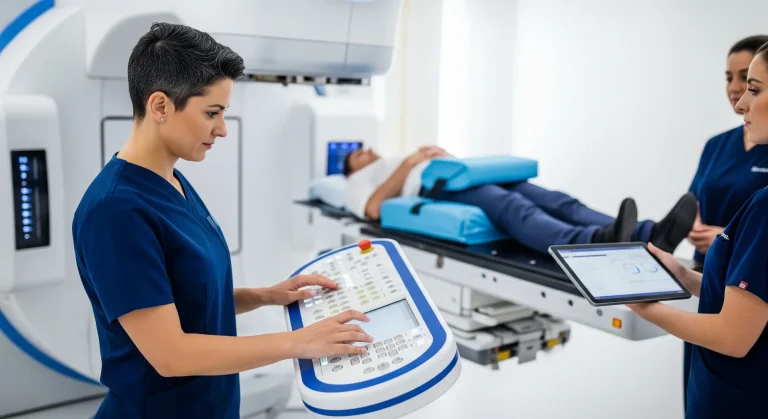

Many clinicians in radiology are regularly exposed to radiation while using equipment like C-arms, fluoroscopy, and X-rays. While garments such as lead aprons or thyroid collars are often worn during procedures to shield against radiation, it’s common to wonder which body parts are most sensitive to exposure, and when using different types of protective garments is necessary.
We’ve created this guide to help decision-makers and workers at healthcare facilities make educated choices when selecting garments and applying radiation safety practices to ensure everyone involved stays as safe as possible. Keep reading to learn more about the body parts and organs that are most sensitive, how to protect them, and tips for success.
Which Part of the Body Is Most Sensitive to Radiation?
Research from the Nuclear Regulatory Commission (NRC) states that the parts of the body most sensitive to radiation are:
- Blood-forming organs, such as bone marrow and the lymphatic system
- Reproductive organs
- Gastrointestinal organs, such as the stomach, small intestine, and esophagus
- Skin of the whole body
- Muscle and brain
That list covers many areas of the body, which is why comprehensive shielding is necessary when working with radiation.
Fortunately, many protective garments are designed to help shield sensitive body parts. For example, lead aprons are designed to cover the entire torso and upper legs to shield many sensitive body parts, such as the reproductive organs, stomach, and small intestine.
Lead is an effective shielding material due to its high density, allowing it to slow and absorb X-rays and gamma rays before they reach the wearer’s body. According to a study in the Journal of Clinical Orthopedic Trauma, 0.5 mm lead aprons can attenuate up to 99% of radiation doses during interventional procedures.
Which Organs Are Most Sensitive to Radiation Damage?
In addition to the organs listed above, some other highly radiosensitive organs include:
- Thyroid gland: Commonly linked to thyroid cancer or hypothyroidism after continuous occupational radiation exposure.
- Breasts: A study from the Journal of Clinical Breast Cancer showed an increased risk of breast cancer during occupational ionizing radiation exposure when proper protective measures aren’t used.
- Eyes: A 2020 study found that regular radiation exposure to the lens of the eyes could increase the risk of both visual and cognitive health problems.
- Hands: Research from the Asian Spine Journal presented a growing body of evidence that a physician’s hands are highly exposed to radiation during interventional procedures using fluoroscopy, increasing the risk of skin, muscle, or bone damage.
How Protective Garments Help Shield Sensitive Organs
While several organs like the ones above are highly sensitive to radiation, many protective garments are available that can help clinicians shield themselves during medical procedures. Common protective garments that can help include:
- Lead aprons: One of the most common garments for radiation shielding. They cover the full torso and upper legs to reduce radiation doses to many sensitive parts of the body, including the breasts, lungs, heart, stomach, small intestine, and reproductive organs.
- Thyroid shields: A thyroid shield wraps around the neck to shield the sensitive thyroid gland. A 2018 study found that a 0.5 mm thyroid shield could reduce radiation doses by 2.5 times, and recommended that clinicians wear one during low and high-dose procedures.
- Lead glasses: Worn by clinicians to shield the lens of the eyes. Research from The Journal of Bone and Joint Surgery found that lead glasses could reduce radiation doses to the eyes by up to 90%.
- Lead gloves: Designed to shield the hands during radiation exposure. However, a study from the International Journal of Environmental Research and Public Health noted that some physicians report reduced tactile sensitivity while wearing lead gloves. Therefore, it’s necessary to balance operational effectiveness with the use of lead gloves in some cases.
How Does Radiation Exposure Increase Cancer Risk?
According to a National Research Council report, one of the main reasons why radiation exposure increases cancer risk is that it damages living cells and tissues throughout the body.
Therefore, if clinicians in medical facilities are continuously exposed to radiation without protection, the damage will build up and increase the risk of cancer. Fortunately, when protective measures are taken, such as wearing protective garments, it reduces cancer risks substantially.
How Can Healthcare Facilities Ensure Their Protective Equipment Is Working?
A study by Cureus stressed the importance of clinicians wearing personal dosimeters during procedures to track their radiation doses over time. Clinicians can place the dosimeter under protective garments, such as a lead apron, to obtain an accurate exposure reading and confirm that the facility’s safety measures are as effective as possible.
Additionally, it’s important to continuously inspect for X-ray garment integrity. Garments like lead aprons will accumulate damage such as cracks, holes, or tears over time, which can reduce their effectiveness. A 2018 study recommended regular X-ray inspections of lead protective garments to identify damage, allowing repairs or replacements before wear and tear becomes excessive.
How We Can Help at RadCare Services (RCS)
We offer several services at RCS that can help you maintain radiation protection garments throughout their lifespan. These include:
- Inspections using X-ray scanning
- Repairs for any mendable damage identified
- Disposal when garments reach the end of their lifespan
- Deep cleaning and disinfection to remove any contaminants
- Inventory management with our RadComply® software
Each of our services is designed to help you keep garments as safe and effective as possible while following guidelines established by governing bodies such as the CDC, AORN, and the EPA.
Additionally, our team can help you source protective garments, such as lead aprons, vests, skirts, thyroid collars, and glasses, to ensure you have high-quality shielding available throughout your facility.
Contact us today to learn more about how RCS can make a difference for you.