Healthcare treatment options, diagnostic processes, and safety guidelines are constantly updated. It’s crucial to stay current on these standards to ensure the safety of patients and clinicians. That includes the personal protective equipment (PPE) worn, such as lead aprons that shield against scatter radiation.
Some regulations have changed in the last year, such as dental lead apron requirements. Additionally, alternatives to traditional lead aprons are becoming more popular, such as lightweight lead and lead-free options.
However, if you’ve heard that lead aprons are no longer used, that isn’t always true. They’re still vital in many medical settings, such as interventional surgery using C-arms and fluoroscopy, where the equipment emits high doses of scatter radiation.
We’ll cover everything here to give you a thorough overview of the current standards and options.
5 Top Reasons Why Lead Aprons Are No Longer Used in Some Imaging
While lead shields were once standard during many medical imaging exams, advances in technology and updated safety guidelines explain why lead aprons are no longer used in certain situations today. Several factors related to radiation exposure, patient safety, and modern imaging equipment have changed how protection is approached.
1. Modern X-Ray Machines Use Much Lower Radiation Doses
One of the main reasons why lead aprons are no longer used as frequently is the improvement in modern X ray machines. Digital imaging systems are far more sensitive than older equipment, allowing clinicians to capture clear images using significantly lower radiation doses. Because radiation exposure from many routine medical imaging exams is now minimal, additional external shielding is often unnecessary.
2. Minimal Risk to Reproductive Organs
Research from major medical institutions has shown that the radiation exposure from modern medical imaging is extremely low and poses negligible risk to reproductive organs in most routine diagnostic exams. As a result, many updated safety guidelines focus more on optimizing equipment settings rather than relying on lead shields for protection.
3. Lead Shields Can Interfere With Imaging
Another reason why lead aprons are no longer used in some imaging procedures is that shielding can interfere with image quality. If lead shields block part of the X-ray beam, the image may become unclear, requiring a repeat scan. This can actually increase total radiation exposure rather than reduce it, which goes against current patient safety goals.
4. Most Radiation Scatter Occurs Inside the Body
Studies referenced by organizations such as the American Dental Association show that much of the radiation scatter during medical imaging originates internally rather than from external sources. Because of this, lead shields placed outside the body often provide limited protection in certain imaging scenarios.
5. Updated Safety Approaches Focus on Targeted Protection
Instead of using full lead aprons for every exam, many safety protocols now prioritize optimized imaging techniques and selective protection. In some procedures, targeted shielding such as thyroid collars may still be used to protect sensitive areas while allowing clinicians to maintain accurate medical imaging results and strong patient safety standards.
When Did Lead Aprons Stop Being Used?
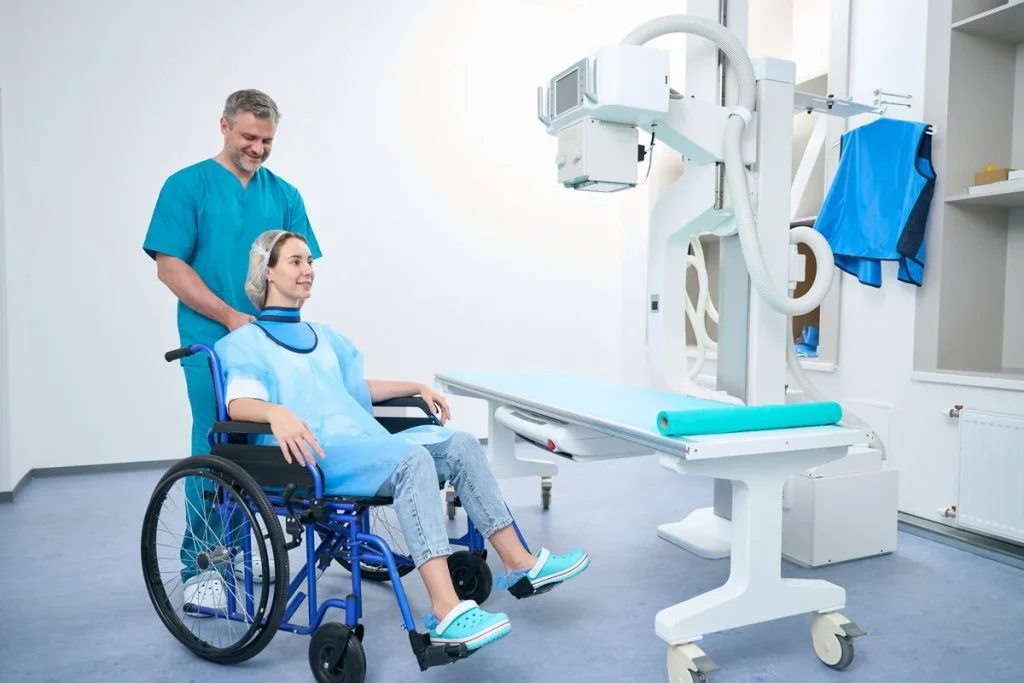
Dentistry is the primary setting where lead aprons stopped being used as often. The American Dental Association (ADA) changed its lead apron guidelines in February 2024. The new ADA lead apron recommendations for 2024 state that lead aprons aren’t needed for dental X-rays as long as facilities use updated machines with the proper calibration.
That said, lead aprons are still necessary in other medical settings. C-arms and fluoroscopy emit much higher doses of radiation than dental X-rays since this equipment is involved in more intensive diagnostic and interventional processes.
Research On Fluoroscopy, C-Arms, And Protective Measures Required
The CDC states fluoroscopy emits relatively high radiation doses, especially during surgical procedures. Those high emissions require shielding like lead aprons to protect clinicians standing close to machines during an operation.
The Association of periOperative Registered Nurses (AORN) also states that the average C-arm emits 2 rem of radiation per minute, but exposure rates vary by procedure. Since many clinicians regularly work near equipment emitting radiation, AORN recommends using ALARA (As Low As Reasonably Achievable) practices. That includes:
- Standing at least 6 feet away from the radiation source when possible
- Using efficient practices to limit time spent on procedures
- Wearing PPE, such as lead aprons, gloves, goggles, and thyroid collars
Are Lead Aprons No Longer Necessary?
In short, dental practices may use no lead apron for dental X-rays because the current ADA regulations state that lead aprons for dental are no longer required when using updated machines with the correct calibrations.
However, lead aprons are essential in medical settings like interventional surgery using C-arms and fluoroscopy, where equipment emits much higher doses of scatter radiation. The Journal of Clinical Orthopedic Trauma states that 0.5 mm lead aprons can attenuate up to 99% of scatter radiation in these settings, providing critical protection for clinicians regularly exposed to it.
Do Lead Aprons Trap Radiation?
The same study from the Journal of Clinical Orthopedic Trauma states that lead aprons can protect wearers from harmful scatter radiation due to the high density of lead.
When X-rays or gamma rays containing radiation interact with lead, it slows their energy down and absorbs it before it reaches the body. You could call that process “trapping” radiation since it absorbs the energy of those beams. However, it’s usually referred to as shielding the wearer from radiation.
What Are The Disadvantages Of Lead Aprons?
The main disadvantage of lead aprons is their weight. Many lead aprons weigh 10 pounds or more. Some aprons can even exceed 25 pounds at higher thicknesses of 0.75-1.0 mm.
A study in 2022 stated that the weight of lead aprons can cause physical strain, induce fatigue, and add stress to joints when clinicians wear them for extended procedures.
The weight can also make lead aprons harder to store since they require heavy-duty hangers and storage racks to avoid damage.
However, modern designs can help. That same study from 2022 also stated that two-piece lead apron designs and wearing a belt helped reduce physical strain. Alternatives like lightweight lead or lead-free aprons are also generally lighter while providing similar levels of protection.
Are Lead Aprons Dangerous?
Lead aprons aren’t dangerous as long as they’re well-maintained, stored properly, and disposed of following regulations for health and safety.
Lead is classified as a highly toxic substance by the EPA, so there could be a risk to the environment and human health if they’re disposed of improperly. However, when lead is sealed in an apron, and the aprons are regularly maintained and inspected, there’s little to no risk to the wearer in medical settings.
To ensure lead aprons remain in good condition and are safe to use, healthcare facilities should:
- Have them inspected annually using X-ray scanning
- Repair any damage (cracks, tears, holes, etc.) as soon as possible
- Dispose of them using proper protocols when they can’t be repaired
We can help with each of these steps at RadCare Services (RCS) to ensure your aprons are safe and effective for all procedures.
What Is An Alternative To A Lead Apron?
The most common alternatives to lead aprons are lightweight lead and lead-free aprons.
A study in the European Journal of Radiology states that there are alternative materials with similar absorption characteristics as lead. Those include:
- Tin
- Tungsten
- Antimony
- Yttrium
- Copper
- Bismuth
- Barium
These materials usually weigh less than lead, which helps reduce fatigue and joint strain for clinicians wearing them.
Lightweight lead aprons contain a mixture of lead and some of these alternate materials to provide protection with less weight.
On the other hand, lead-free aprons don’t contain any lead and only use these alternate materials.
The same study from the European Journal of Radiology found that lightweight lead and lead-free aprons perform similarly to traditional lead in lower-intensity procedures. However, traditional lead performed slightly better in procedures with stronger radiation beams. Therefore, traditional lead aprons are still needed in specific settings.
Partner With RCS To Keep Your Lead Aprons In Top Condition
While dental X-ray safety standards have changed, lead aprons are still necessary in medical settings. Maintaining them well ensures they remain effective, extend their lifespan, and keep clinicians and patients safe during crucial procedures.
Our services include:
- Annual inspections using X-ray scanning
- Deep cleaning and disinfection
- Garment repairs
- Lead apron disposal and equipment purchases
You’ll also get access to our RadComply™ inventory software when you partner with us. It’s designed to help busy medical facilities manage lead apron inventories to ensure you never miss a scheduled inspection or cleaning.
Contact us today to learn more about how we can help keep your lead aprons safe and effective.